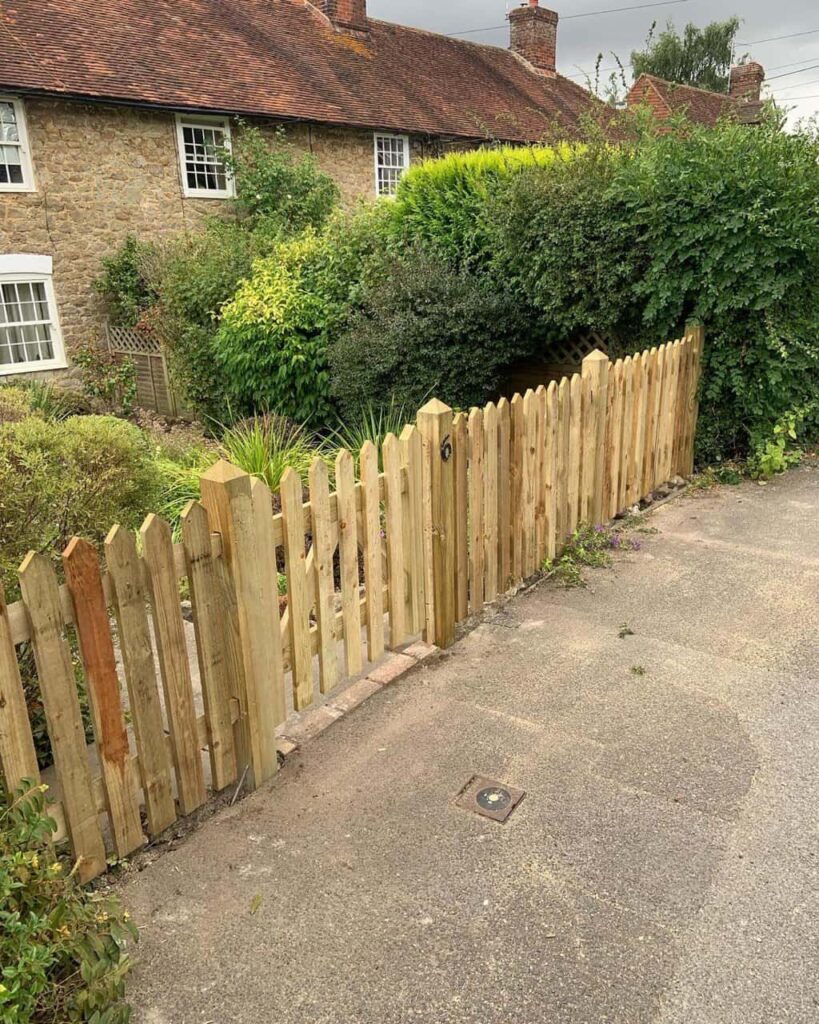
Can a Leaning Fence Be Straightened and Repaired?
A fence that has started to lean can make an otherwise well-maintained garden look untidy, but appearance is only part of the concern. Leaning usually indicates that one or more structural components are no longer supporting the fence correctly. If the underlying problem is left unresolved, movement can place increasing strain on neighbouring posts, panels, rails and fixings.
The good news is that a leaning fence does not automatically need replacing. Where the majority of the boundary remains in reasonable condition, professional repairs can often straighten the affected section and restore its stability.
For property owners in Mundford, Norfolk, the important first step is determining why the fence has moved. Once the cause is understood, it becomes much easier to establish whether a targeted repair or more extensive fencing work is appropriate.
Why Do Fences Start Leaning?
Fencing relies on several components working together. Posts provide the main structural support, while panels, boards or rails form the visible boundary between them.
When one component weakens, the rest of the structure can begin moving.
Common causes of leaning fencing include:
- Weakened or deteriorated fence posts
- Movement around the base of posts
- Loose connections between fencing components
- Damaged rails
- Repeated exposure to strong winds
- Age-related deterioration
- Excessive weight from damaged or unstable sections
- Ground movement affecting the supporting structure
Identifying which of these issues is responsible is more useful than simply pushing the fence back into position.
Can a Leaning Fence Be Straightened?
Yes, many leaning fences can be straightened successfully.
However, whether this provides a lasting repair depends on the condition of the supporting components.
If a fence is leaning because a sound post has moved slightly, restoring the post and securing the surrounding section may be sufficient. If the post itself has deteriorated significantly, straightening it without addressing that weakness is unlikely to provide dependable support.
Professional fence repair therefore involves more than making the boundary look level again.
The objective is to restore structural stability so that the repaired section can continue performing properly.
Fence Posts Are Often the First Place to Check
A fence is only as stable as its supports
When a substantial section of fencing leans together, the supporting posts should be carefully assessed.
Posts experience considerable pressure because they support the fencing above ground while remaining fixed below it. Over time, deterioration or movement can reduce their ability to hold the boundary upright.
Possible signs of a post problem include:
- Movement when the fence is pushed gently
- A visible lean originating from the post
- Panels moving together with the support
- Gaps appearing between adjoining components
- A post that no longer sits firmly in position
Where one post has failed but the surrounding fencing remains sound, replacing or repairing that particular support may allow much of the existing boundary to be retained.
Why Simply Pushing the Fence Upright Is Not Enough
A leaning fence can sometimes be temporarily moved back towards its original position, but this does not explain why it leaned in the first place.
If the supporting post remains unstable, the fence may gradually move again.
The same applies where loose rails, fixings or other components are contributing to the problem.
A successful repair needs to address both the visible movement and its underlying cause. Otherwise, the work may only disguise the defect temporarily.
Can Individual Fence Posts Be Replaced?
Where deterioration is limited to particular posts, it may be possible to replace the affected supports while retaining serviceable sections of fencing.
This can be especially worthwhile when:
- Most panels remain in good condition
- Adjacent posts are stable
- Damage is concentrated in one section
- The overall fence still performs effectively
- Rails and other structural components remain suitable for reuse
A professional fencing contractor can assess whether the existing components are strong enough to be retained as part of the repair.
What If the Fence Panels Are Still in Good Condition?
A leaning fence does not necessarily mean that the panels themselves are damaged.
In some situations, panels have simply moved because the posts supporting them are no longer secure.
If the panels remain structurally sound, professional repair may allow them to be repositioned and reused once the underlying support has been restored.
This is why the complete fence should be assessed before deciding that replacement is necessary.
Removing serviceable panels simply because a post has failed may involve more work than the boundary genuinely requires.
Loose Rails and Fixings Can Also Cause Movement
Not every leaning fence problem begins below ground.
Rails, brackets and other connections help keep fencing components securely aligned. If these become loose or deteriorated, sections of the fence can begin moving independently.
Repeated movement can then place additional strain on other parts of the boundary.
Professional repairs may involve securing or replacing affected connections so that the fence works as a stable structure again.
The condition of the surrounding timber should always be considered before anything is refixed.
Wind Can Expose Existing Weaknesses
Fencing presents a broad surface to the wind, which means weakened components can experience considerable pressure during poor weather.
A fence that previously appeared stable may suddenly begin leaning after a period of strong winds.
In many cases, the weather has exposed an existing weakness rather than creating the entire problem from nothing.
For example, a post may already have been losing stability before wind pressure finally caused noticeable movement.
After wind-related damage, it is therefore sensible to inspect neighbouring sections as well as the most obvious leaning area.
Why One Leaning Section Can Affect the Rest of the Fence
Fence components do not operate completely independently.
A weakened post may allow neighbouring panels to move. Those panels can then place additional strain on the next posts and connections along the boundary.
Over time, a relatively localised defect can therefore affect a much larger section.
This is one of the strongest reasons for addressing leaning fencing promptly. Repairing the original weakness can help protect otherwise serviceable components from unnecessary movement.
When Is a Localised Fence Repair Suitable?
Targeted repair is often worth considering when deterioration is limited.
Examples include:
- One unstable post
- A small number of leaning panels
- Localised rail damage
- Loose fixings within one section
- Limited wind damage
- Sound fencing surrounding the affected area
In these circumstances, professional repairs can potentially restore stability while retaining much of the existing boundary.
The key question is whether the materials being retained remain strong enough to provide dependable support.
When Might a Leaning Fence Need More Extensive Work?
Sometimes the visible lean is only one symptom of widespread deterioration.
If numerous posts are unstable, several panels have deteriorated and different sections of the boundary are moving, repairing one component may achieve very little.
Signs that more extensive work may be appropriate include:
- Several leaning sections
- Widespread post deterioration
- Multiple damaged rails
- Numerous loose or damaged panels
- Repeated movement after previous repairs
- General instability along much of the boundary
The condition of the complete fence should guide the recommendation rather than the appearance of one particularly damaged section.
Repairing Early Can Extend the Fence’s Useful Life
A small amount of movement is easy to overlook, especially when the fence remains standing.
However, movement places stress on connections that are designed to remain relatively stable.
Addressing a weakened post or loose section early can prevent that repeated movement from damaging surrounding components.
This can make professional repairs valuable not only for correcting the current problem but also for preserving more of the existing fence.
A Straight Fence Restores More Than Appearance
Correcting a leaning boundary can make an immediate visual difference to a garden, but the practical benefits are equally important.
A stable fence can help restore:
Privacy
Leaning sections can create unwanted gaps between panels or along boundaries.
Boundary definition
A straight, secure fence provides a much clearer and tidier division of outdoor space.
Garden usability
Unstable fencing can intrude into paths, planting areas and other frequently used parts of the garden.
Overall presentation
Straightening damaged sections can make an established boundary look significantly better without unnecessarily replacing sound fencing.
Why Professional Assessment Is Important
It is not always obvious why a fence has started leaning.
The most visible problem might be a displaced panel, while the actual cause is an unstable post. Alternatively, several components may have deteriorated together.
Professional assessment considers the fence as a complete structure, including:
- Posts
- Panels or boards
- Rails
- Connections and fixings
- Alignment
- Stability of neighbouring sections
- The extent of deterioration
This helps ensure repairs are directed at the cause rather than only the symptom.
Repair or Replace? The Condition of the Fence Should Decide
There is no reason to replace an entire fence when the majority of it remains sound and a targeted repair can restore dependable performance.
Equally, repeatedly repairing isolated sections of a severely deteriorated boundary may not address its overall instability.
The right approach depends on the extent of the damage.
A professional fencing contractor can determine which components remain serviceable and which require attention, allowing the work to be proportionate to the actual condition of the fence.
Professional Fence Repairs in Mundford
Fast Fix Fencing Mundford provides professional fencing services for properties throughout Mundford, Norfolk.
If your fence has started leaning, our approach is to establish why the movement has occurred before recommending the appropriate work. Where posts, panels or other components can be retained, targeted repairs may restore the boundary without unnecessary replacement.
Where deterioration is more extensive, assessing the complete fence allows the most suitable solution to be identified.
Conclusion
A leaning fence can often be straightened and repaired, particularly when the problem is confined to one or several weakened components. Unstable posts, loose rails, damaged fixings and localised wind damage can all cause fencing to move even when much of the boundary remains in good condition.
The important point is to correct the cause of the movement rather than simply pushing the fence upright. Professional repairs can restore structural support, realign the affected sections and help prevent damage from spreading further along the boundary.
If your fence in Mundford, Norfolk has started leaning or feels increasingly unstable, contact Fast Fix Fencing Mundford. We can assess the condition of the existing boundary and recommend an appropriate repair based on what the fencing genuinely requires.
Call us on: 01842 771 491
Click here to find out more about Fast Fix Fencing Mundford
Click here to complete our contact form and see how we can help with your fencing needs.